You master a topic. Weeks later, it slips. This is completely normal - and the question isn't whether it happens, but what your learning system does about it.
Everyone forgets
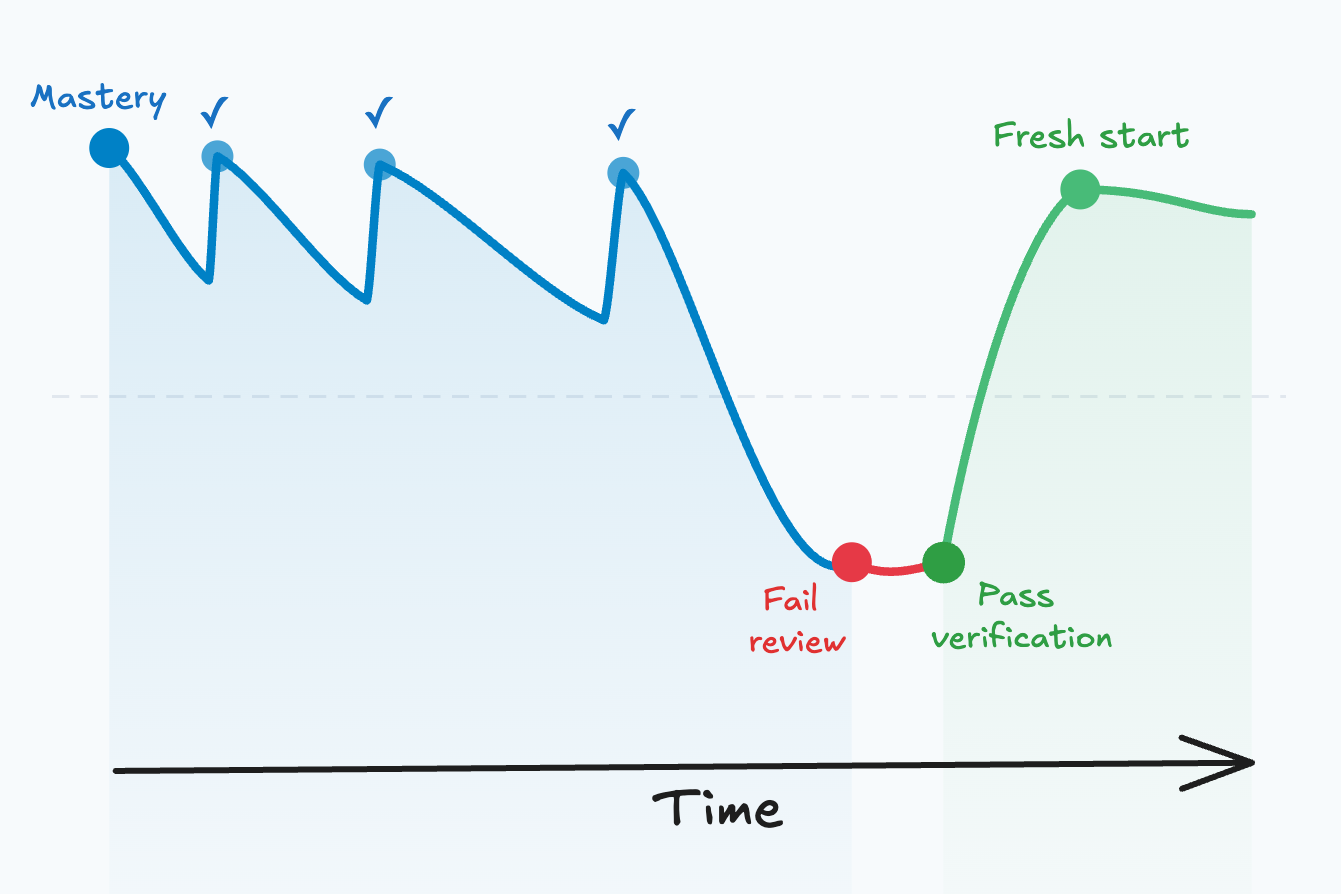
Hermann Ebbinghaus demonstrated over a century ago that memory decays predictably over time. Without reinforcement, most of what you learn fades within days. This isn't a flaw in how you study - it's how human memory works.
Most learning platforms deal with this in one of two ways: they either ignore it entirely (no reviews, no retention tracking) or they treat every failure identically. Neither works. Ignoring forgetting means your knowledge quietly erodes. Overreacting to every stumble wastes your time on problems that don't exist.
The goal isn't to prevent forgetting - it's to detect it accurately and respond proportionally.
Verify first, act second
A single failed review doesn't mean you've forgotten something. You might have been tired, distracted, or misread the question. Research on memory retrieval consistently shows that recall performance fluctuates - one bad attempt doesn't necessarily reflect a genuine gap.
So when you fail a review, Nodeledge doesn't panic. It schedules a short verification review - a quick retest of the same topic under fresh conditions. If you pass, everything continues normally. One bad day shouldn't undo weeks of genuine learning.
Why not act immediately?
Imagine being told you've forgotten something you actually know perfectly well, just because you had an off moment. That's demoralising and inaccurate. Verification separates signal from noise.
When forgetting is real
If you fail the verification too, that's a confirmed problem. Nodeledge unmasters the topic and puts the lesson back on your path.
This isn't punishment - it's targeted re-learning. The lesson is already tailored to that specific topic, so you're not wading through unrelated material. You're re-engaging with exactly the concepts that have decayed.
After you pass the lesson again, your review schedule starts fresh. The old schedule clearly wasn't working, so there's no point carrying it forward. And re-learning is typically much faster than first-time learning - your brain retains structural traces of the original encoding, what Ebbinghaus called the "savings effect".
Spacing, not cramming
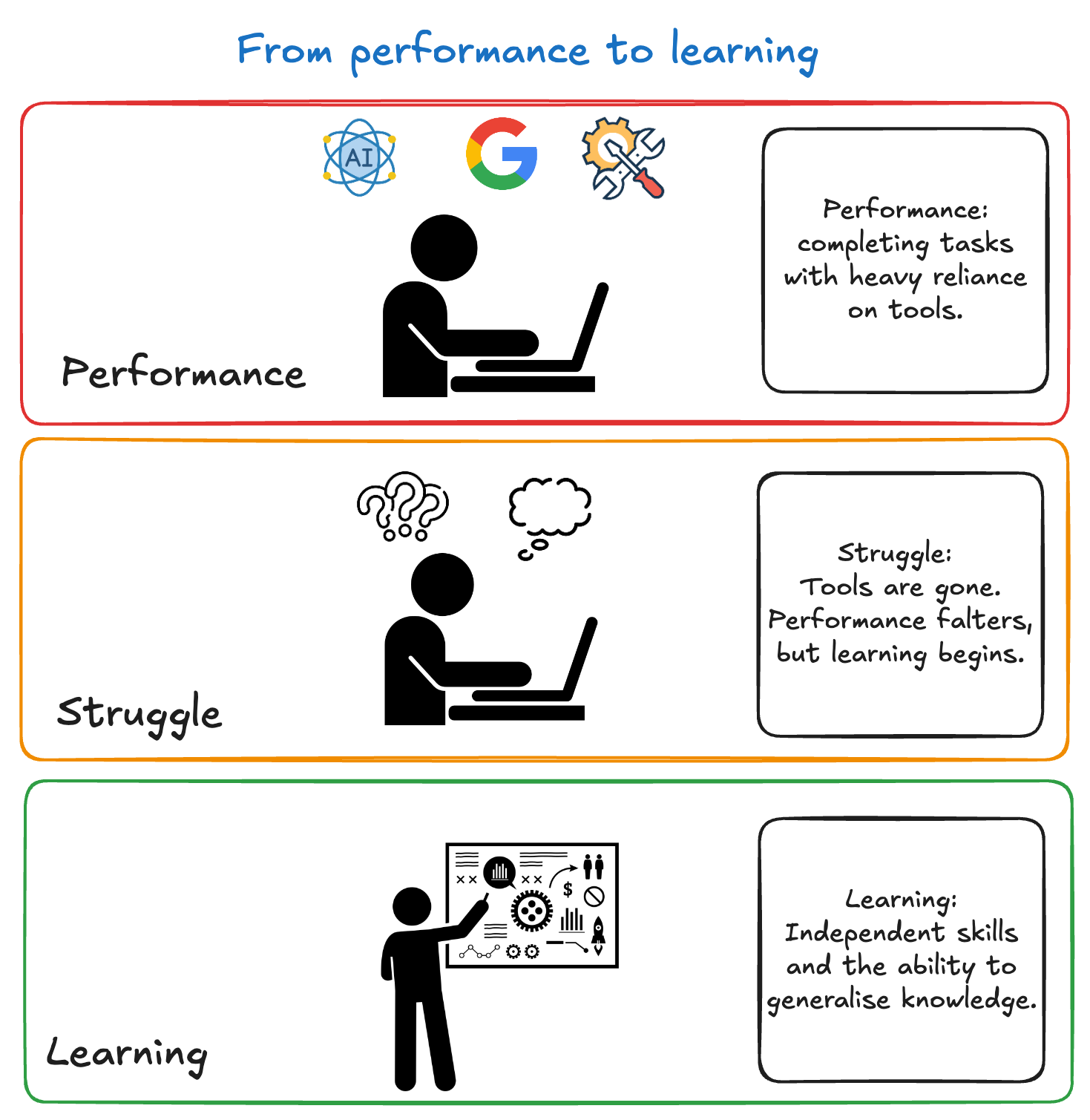
When a lesson is genuinely difficult and you fail it multiple times, immediately retrying rarely helps. You end up pattern-matching the questions rather than understanding the material.
Nodeledge encourages you to step away. Repeated failures introduce progressively longer gaps before your next attempt - enough time to review the material and come back with a fresh perspective. This aligns with decades of research on spacing effects: a gap between attempts leads to better encoding than hammering away at something that isn't clicking.
The bigger picture
Adaptive remediation is tightly integrated with Nodeledge's Hierarchical Spaced Repetition System and the knowledge graph that structures the curriculum.
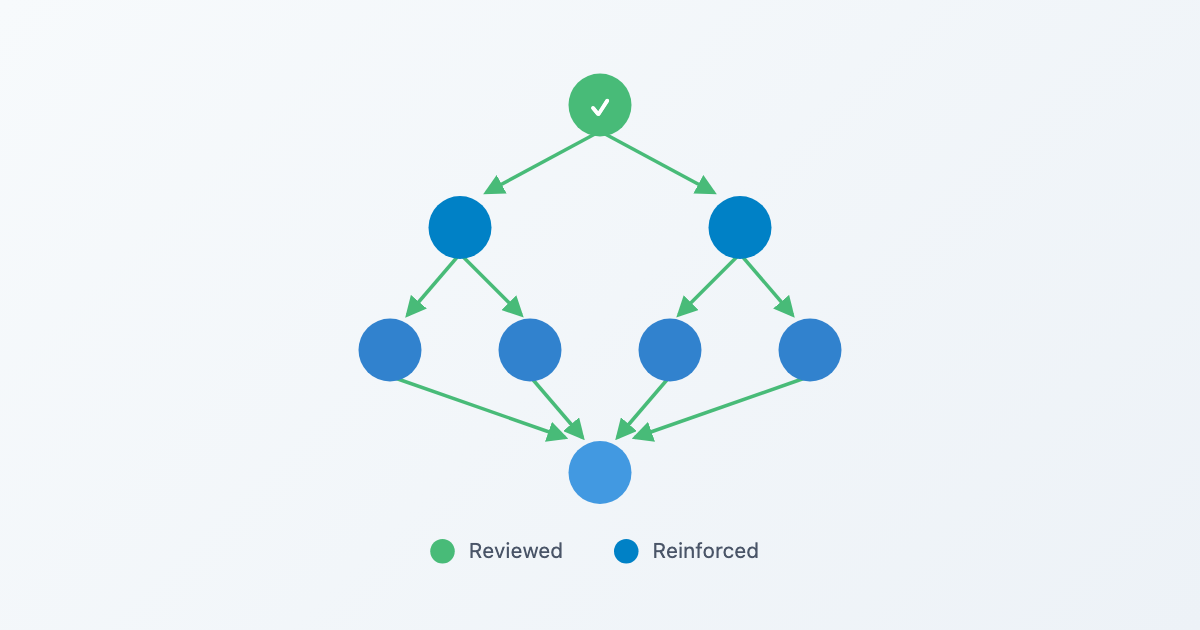
When a topic is unmastered, the effects ripple through the graph. Topics that depend on it are flagged - you can't build on a foundation that's crumbling. This prevents the common problem where a forgotten prerequisite silently undermines everything built on top of it.
Think of it as a safety net. HSRS handles the normal rhythm of learning and review. Adaptive remediation catches the cases where normal review isn't enough - where genuine forgetting has occurred and targeted intervention is needed.
The system isn't trying to be lenient or strict. It's trying to be accurate - distinguishing between a bad day and a real problem, then responding appropriately.
Knowledge that adapts with you
Nodeledge doesn't just teach you something and move on. It monitors how your knowledge evolves over time - reinforcing what sticks, catching what slips, and ensuring that every topic in your learning path is genuinely mastered. Adaptive remediation is how we keep that promise. To learn more about the retention system it builds on, read about Hierarchical Spaced Repetition.