If you're a complete beginner at coding, you ought to consider learning to code in the browser.
You write Python straight into the page, with nothing to install.
You might think this is ideological BS, but there are at least 3 solid reasons for this view:
Cognitive load theory
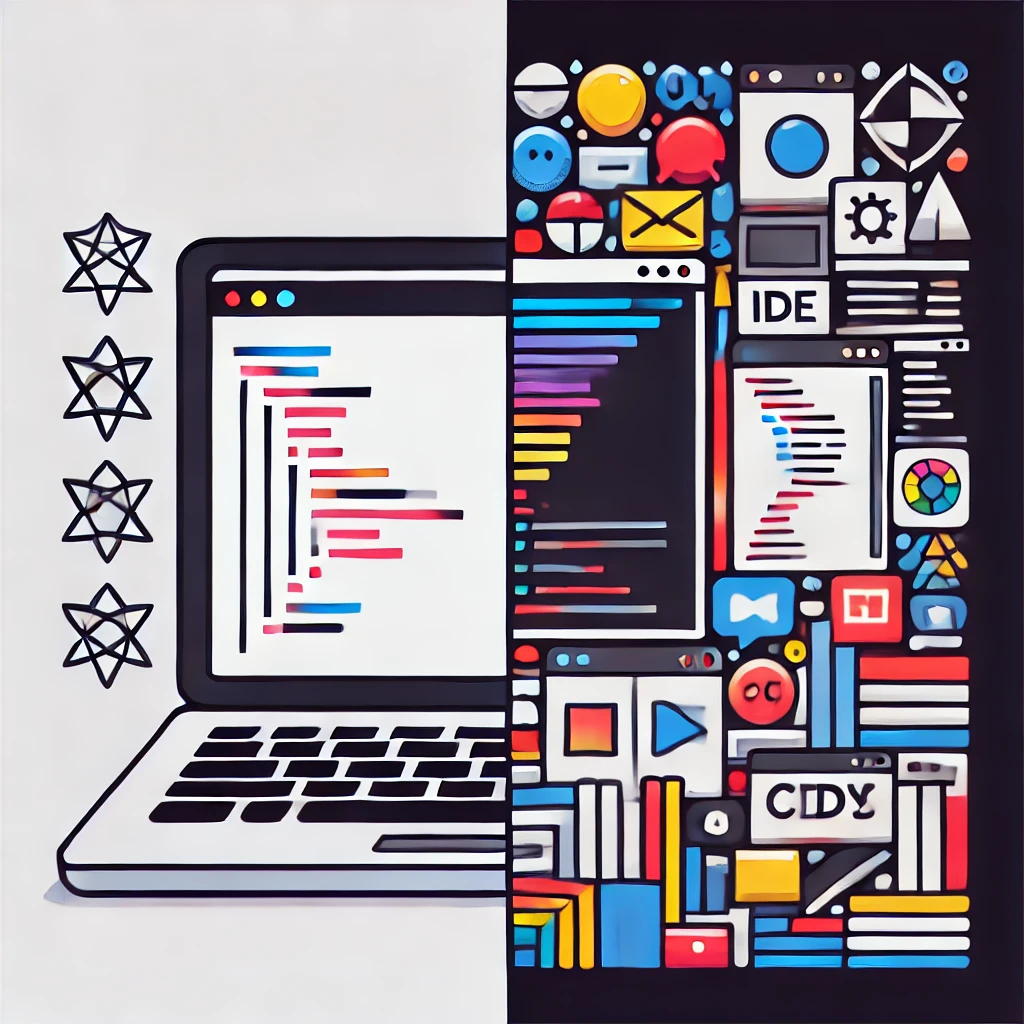
In the early stages of knowledge-acquisition, your brain can only handle so much before your finite working memory gets overwhelmed. Setting up coding environments or battling with IDE settings eats into your limited bandwidth and distracts you from the core material you're trying to master. Who hasn't sat down to write code and ended up troubleshooting their setup for half an hour instead? Start in a simple browser-based environment where the focus is on coding, not fighting your tools.
Memory is the residue of thought
What you focus on during a session is what sticks. Be honest: when you're learning to code, how much time do you spend actually coding versus fiddling with your editor's theme or plugins? We've all likely done this and it's easy to do so once the going gets tough. Instead, prioritise an environment that's simple and keeps your attention on the code.
Novices are not mini-experts
Experts rely on mental frameworks (schemas) built from years of practice. As a beginner you don't have these yet, so copying expert workflows - like jumping straight into complex setups - is a recipe for frustration. Don't listen to this siren call. Own where you are. Start as a beginner. Think like a beginner. And build the right habits from the start.
How Nodeledge handles this
Python in Nodeledge runs in the browser with nothing to install. The screen is kept plain - text, diagrams and questions - so the only thing left to think about is the work.
Every lesson is a few small steps, and every step starts with a worked example, solved line by line, before you're asked anything. How Nodeledge works covers the whole system.