The diagnostic test on Nodeledge's new Calculus learning path was 158 questions long. Nobody was ever going to sit that.
The old test got too long
The core trade-off in any diagnostic test is the number of questions versus accuracy. Learners only want to sit a short test - which is fine when the content library is small. But Nodeledge's content library has grown significantly, and the old diagnostic test was a fixed set of questions, so it grew too.
A fixed set was defensible to begin with. Deciding the questions up front gave me the most control - I knew exactly what every learner was going to experience. But once the content reached a certain size, I had to accept that I couldn't quiz every piece of knowledge independently. The test would have to perform inference about what the learner knows, and that means adapting to each learner as they go.
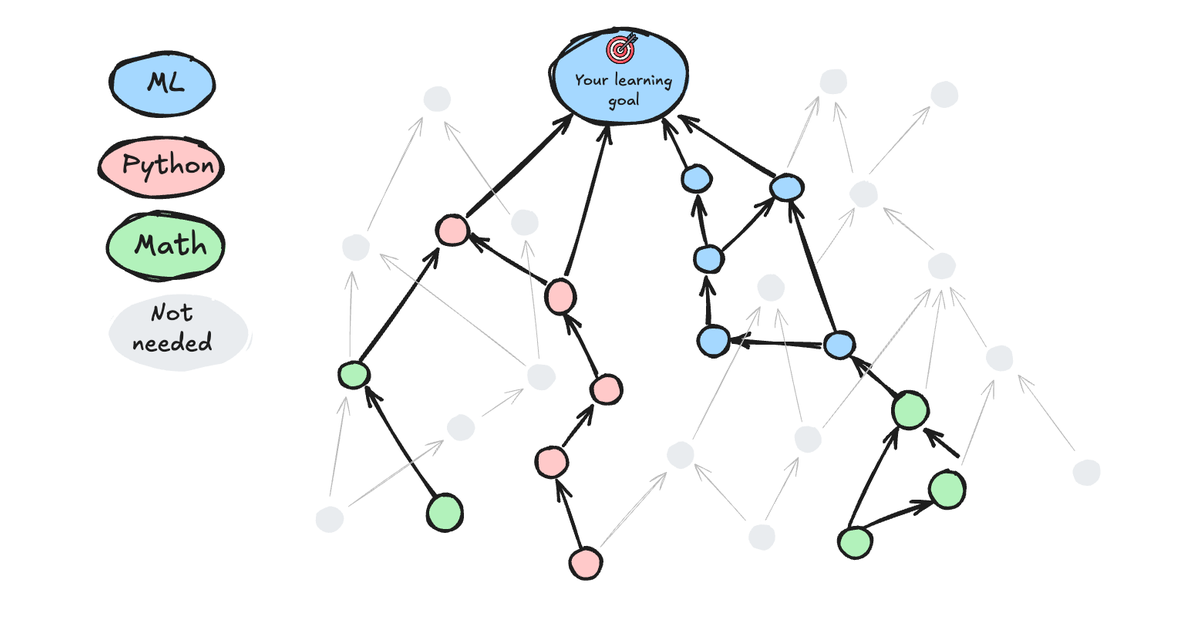
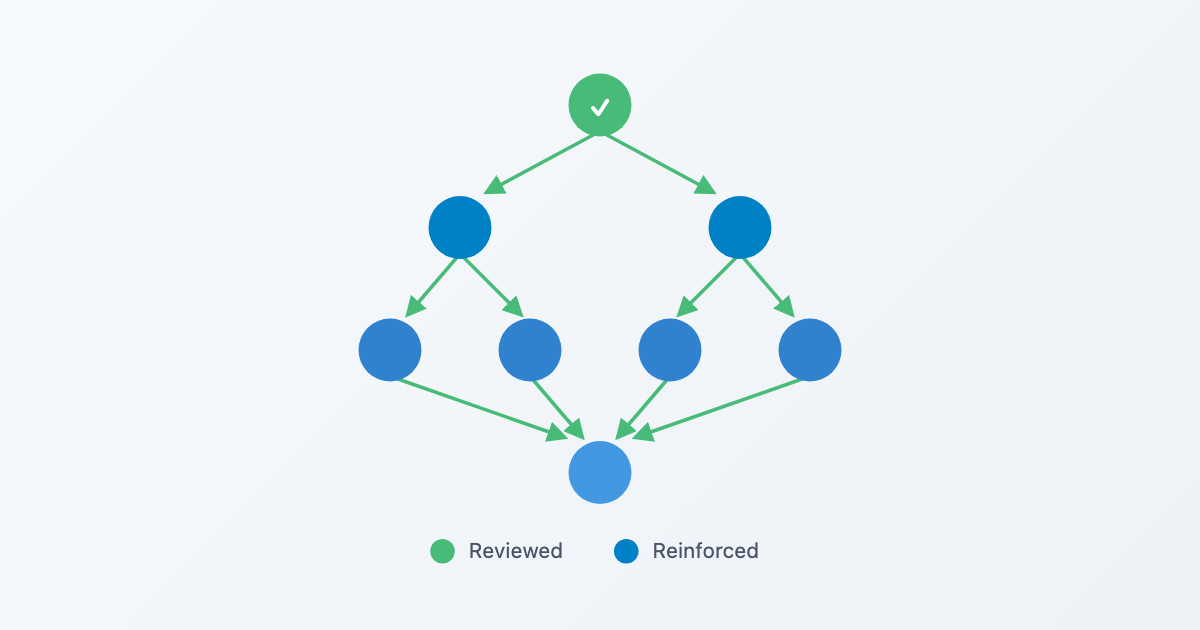
So the new diagnostic test is adaptive. It leans on Nodeledge's knowledge graph - the map of which topics are prerequisites for which. Integrate a product by parts and you've exercised its prerequisites along the way - you've differentiated one factor and found an antiderivative of the other. A right answer is evidence about both, so the test doesn't need to ask about each one.
A shorter test can be wrong in two ways
Inference is what makes the test short, and it's also what can go wrong. The test can leave a lesson on your learning path that you already know, which wastes your time. Or it can credit a topic you don't know, and then you build on a gap. The more a test infers, the fewer questions it asks - and the more of both mistakes it risks.
I can't judge that trade-off by sitting the test myself - I'm one learner. I could wait and collect data from real learners, but for a growing library that would take a long time. And with real learners I don't truly know whether they know something or not until much later. If the test credits you with integration by parts, the only way for me to find out whether it was right is to wait and see if you struggle.
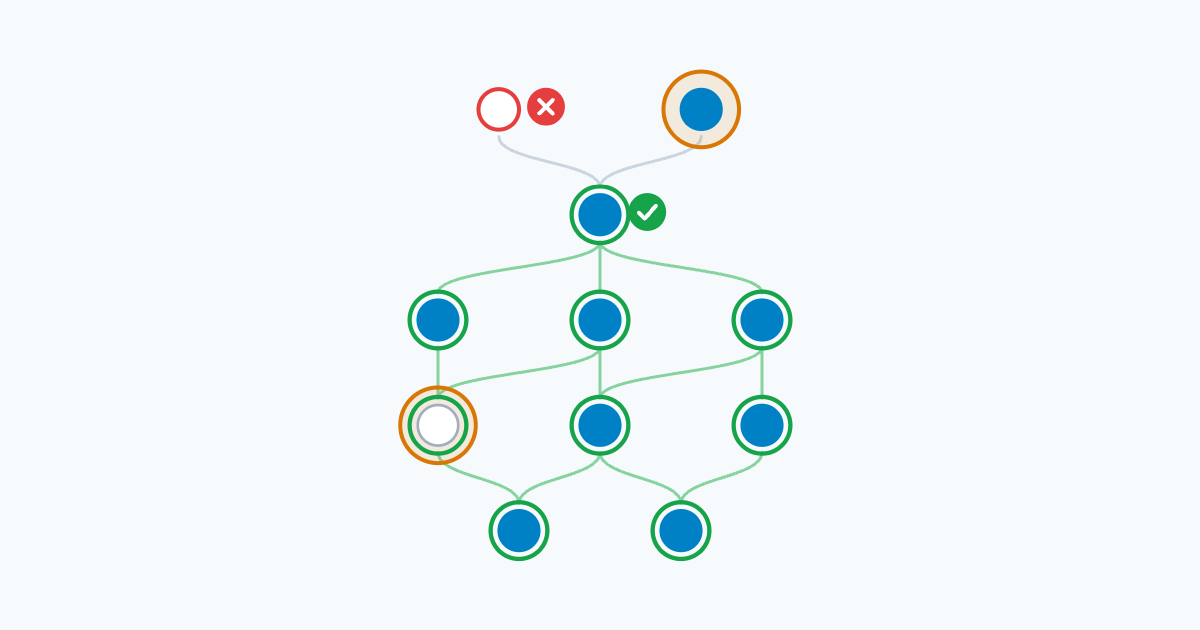
So I built a simulation instead. The test is sat by thousands of simulated learners - and because I define what each one knows, I can check every call the test makes.
This simulated learner knows the filled topics .
The goal was to find the best set of rules for the test. A rule is a decision about how the test behaves - how much to infer from one answer, which topic to ask about next, when to stop. To compare one set of rules with another, there are two core things I need to get right: the learner profiles and the metrics.
The simulated learners sit the test, and their results become the metrics.
First, the learner profiles
Every simulated learner has a knowledge profile, drawn from my best understanding of who Nodeledge's learners are, and from research - a beginner, someone with school maths, someone who took maths at university, a practitioner coming back to it after years away. The cohort has to be representative of the learners I expect on the platform, across the different subject areas.
A profile is just a list of the topics that learner knows and doesn't know. Because I wrote the list, I know the ground truth, so I can mark the test: for every topic and every learner, I can say whether it got it right. That isn't possible with real learners.
I can also say which topics are more core than others, and which kinds of knowledge are more likely to be forgotten - random trivia is forgotten sooner than a common technique or a core concept.
Second, the metrics
There are many metrics of interest, but four core ones in particular, measured for every learner:
- Questions asked. Your time at the test.
- Known lessons left on your learning path. What the test wrongly makes you do.
- Topics credited that you don't know. What the test wrongly lets you skip.
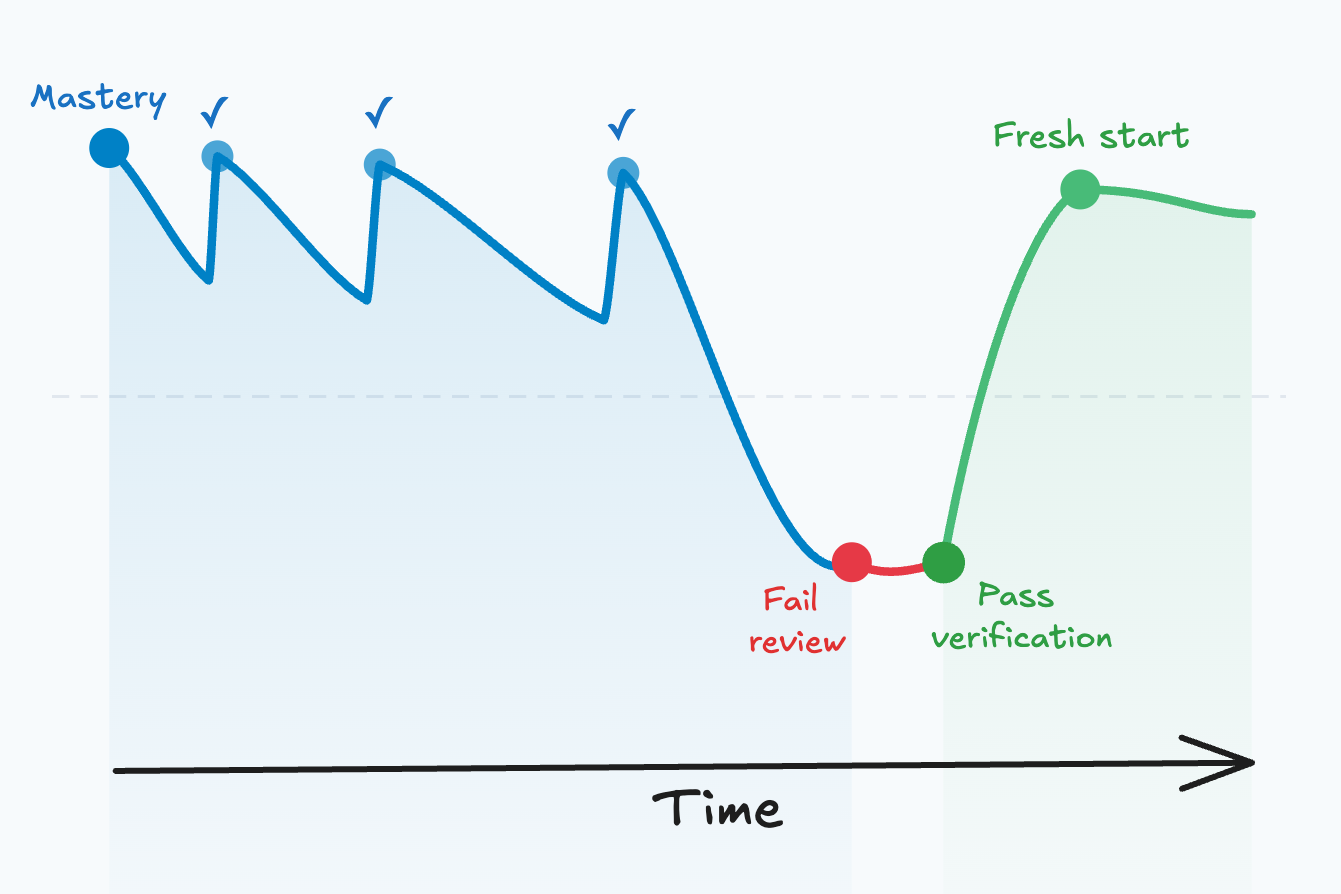
- Trouble in the weeks after. Failed reviews and failed lessons that trace back to the test's mistakes.
Since it's a Monte Carlo simulation, I can compute the distribution of each of those metrics, so I can work out what a rule means for the median learner, the 90th percentile, and so on. It's not enough to compute average metrics - the focus should be on the learners who fare worst under a set of rules.
Now the rules are safe to explore
Once the profiles and the metrics are fixed, the rules become a design space to explore. Change a rule, have the same learners sit the test again, read the same metrics. It's a bit like training a machine learning model, except the search is done by hand - I decide what to try next. I did that more than sixty times over several months!
As long as you trust the assumptions and compute the right metrics, you're safe to explore.
Plenty of ideas that sounded sensible turned out not to be worth it. I started with a search over the design space, to understand how changing the obvious parameters affected the metrics. Once I understood that, I looked for the simplest set of rules that gave similar metrics.
Where I couldn't check an assumption, I ran the rules across a range of values instead of trusting a single number - and again for different study habits, from a learner who studies every day to one who turns up two or three days a week.
The result
The new diagnostic test is much shorter, and it works on every learning path in the existing library. In the simulation it also leaves far fewer lessons on your learning path that you already know. Monitoring checks run every day and alert me if anything goes wrong.
The test will keep evolving as data from real learners comes in. Crucially, I now have a research harness that can robustly test new ideas before they reach you.
Try the diagnostic test
Nodeledge's learning paths come with an optional diagnostic test. If you already know some of the material, it finds your knowledge frontier and starts you there.