"I understand it, I just can't remember it." It's one of the most natural things to say when you're learning something technical - and it's a contradiction. Unpicking why changes how you should study.
There is nowhere else to put it
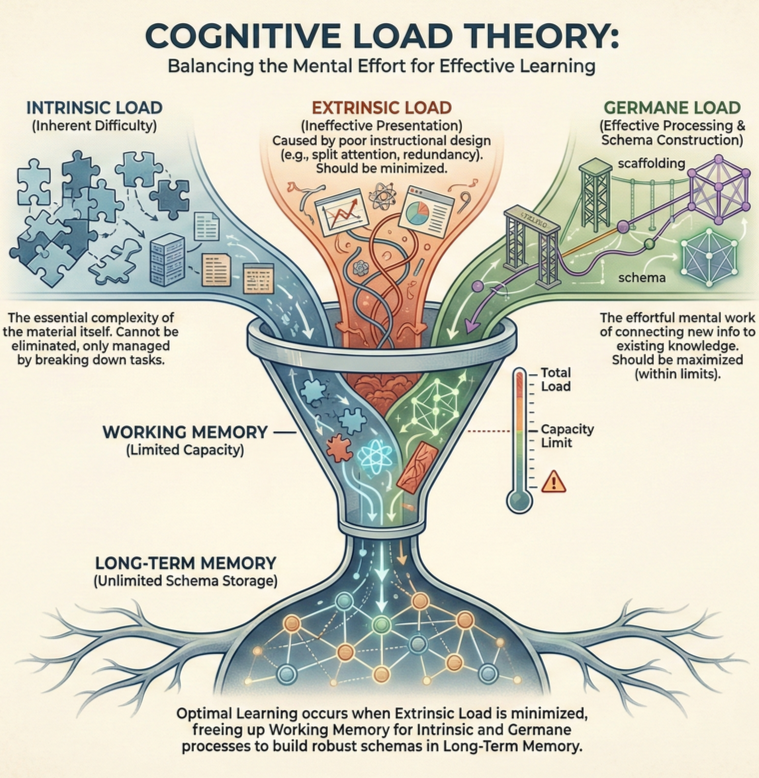
All of your expertise is stored in long-term memory. All of it - there is literally nowhere else to put it. Facts? Stored in long-term memory. Complicated procedures? Stored in long-term memory. Your misconceptions? Also stored in long-term memory. "Understanding" itself? Yes - stored in long-term memory.
An experienced mathematician doesn't have a better memory than you in any general sense. What they have is thousands of stored patterns and richly connected schemas, built up over years. That store is their expertise.
So what is understanding, if it's just memory?
It's memory with structure.
When an expert sees a derivative, they don't retrieve one isolated fact - a whole web of neurons fire. Where a novice sees only symbols to decode, to the expert it is different. The notation means something: a slope, a rate, a story about change.
It's why novices learning maths get tripped up by small typos or unusual notation - unable to reason yet in terms of what the notation means, only what it says, one stray symbol crashes the whole line of thought. Terence Tao calls these "compilation errors" - the novice reads line-by-line, like a compiler:
A single typo or undefined term in the paper can cause one's comprehension of the paper to grind to a complete halt.
— Terence Tao
An expert barely notices the typo: the meaning autocorrects it.
The memorise-versus-understand debate misses the point
Rote memorisation gives you isolated facts: slow to store, quick to forget, hard to use. Nothing else points at them.
Understanding gives you the same facts woven together. Each connection is another route back to the idea, so you retain it with less effort and can retrieve it when you need it. That's all "deep understanding" is: richly connected memory. The connections are what make it durable. But the point is still to develop knowledge in your memory.
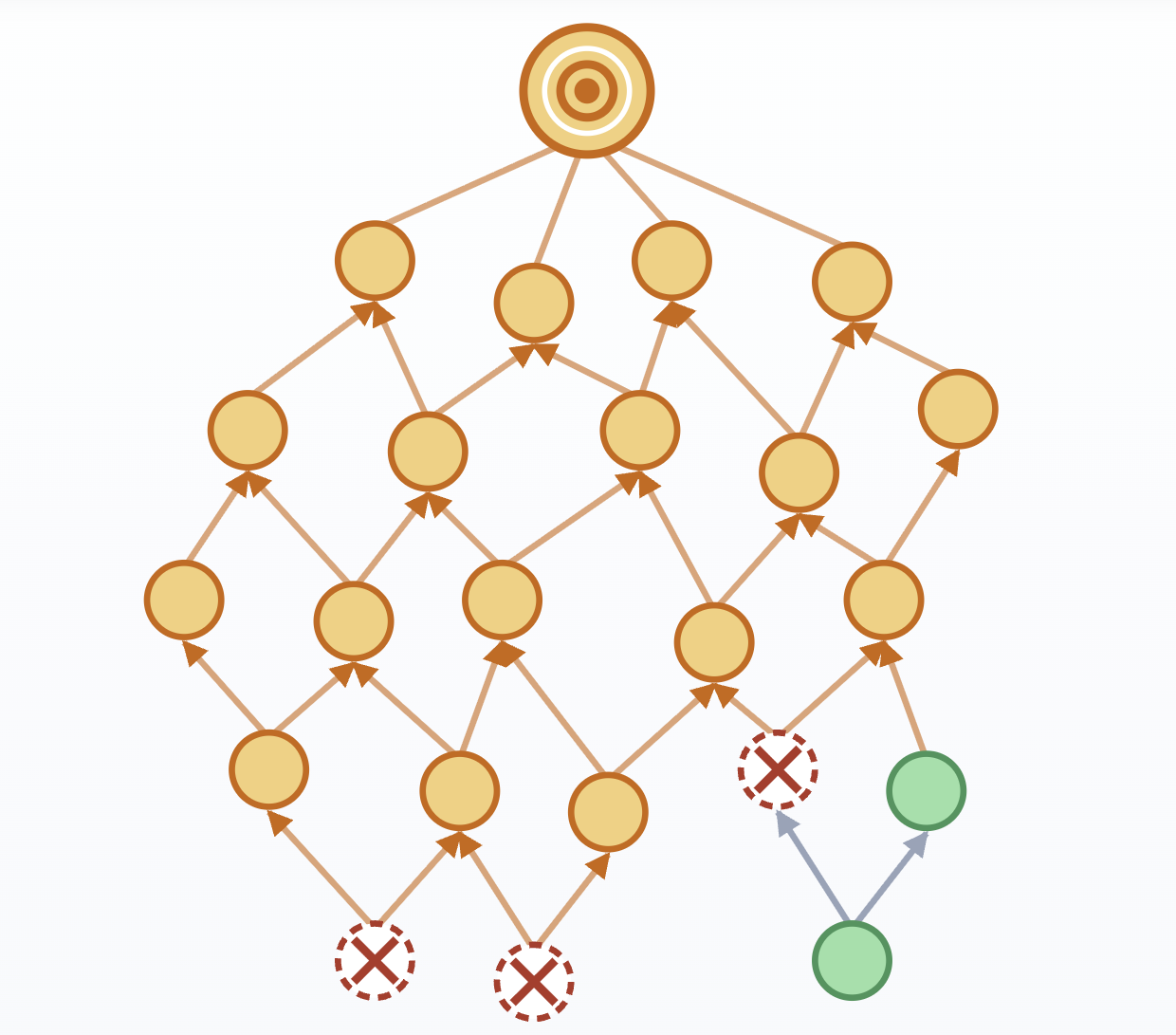
This also helps decide how you should approach learning. You don't understand first and memorise later - that's backwards. Connections need something to connect to: facts and procedures already stored, automatic enough to be cheap to use.
Understanding is built on a bedrock of memorised knowledge, not instead of it.
In reality both are intertwined - you develop factual and procedural knowledge, then your conceptual understanding, which in turn makes the next layer of facts easier to store. And so on and so on. Revisiting old material with new knowledge is how the structure deepens: what was an isolated procedure on the first pass becomes a connected idea on the third. It's why Terence Tao advises mathematicians to keep learning and relearning their own field - even at the top, learning "never really stops", and each return over familiar ground surfaces connections that weren't visible the time before.
Familiarity masquerades as ability
The trap in all of this is that recognition feels like knowledge. Watching someone else solve a problem, or re-reading your notes, feels like knowing. However the true test is production: can you retrieve the knowledge from memory unaided? If not, how can you claim to have learnt anything?
And speed matters - it's a proxy for how fluent you are. If you can do it quickly, without reaching for support, it's yours - the knowledge has been automated, and using it costs almost no thinking effort. If you merely recognise it when you see it, it isn't yours yet. What looks like effortless talent in an expert is exactly this: not thinking harder than you, but thinking with components that no longer cost anything.
At the far end of this road sits what Tao calls the "post-rigorous" stage of a mathematician's education: the formal machinery so internalised that intuition and rigour run together. The scale is different from learning your first calculus, but the mechanism is the same one - you get there through automation, never around it.
So the next time you catch yourself saying "I understand it, I just can't remember it", read it back slowly. What you mean is that you haven't learned it yet.
How Nodeledge handles this
Nodeledge is built around the fact that understanding is structured memory. Lessons unlock in prerequisite order, so every new idea lands on the bedrock it connects to - you're never asked to build understanding out of pieces you don't yet own.
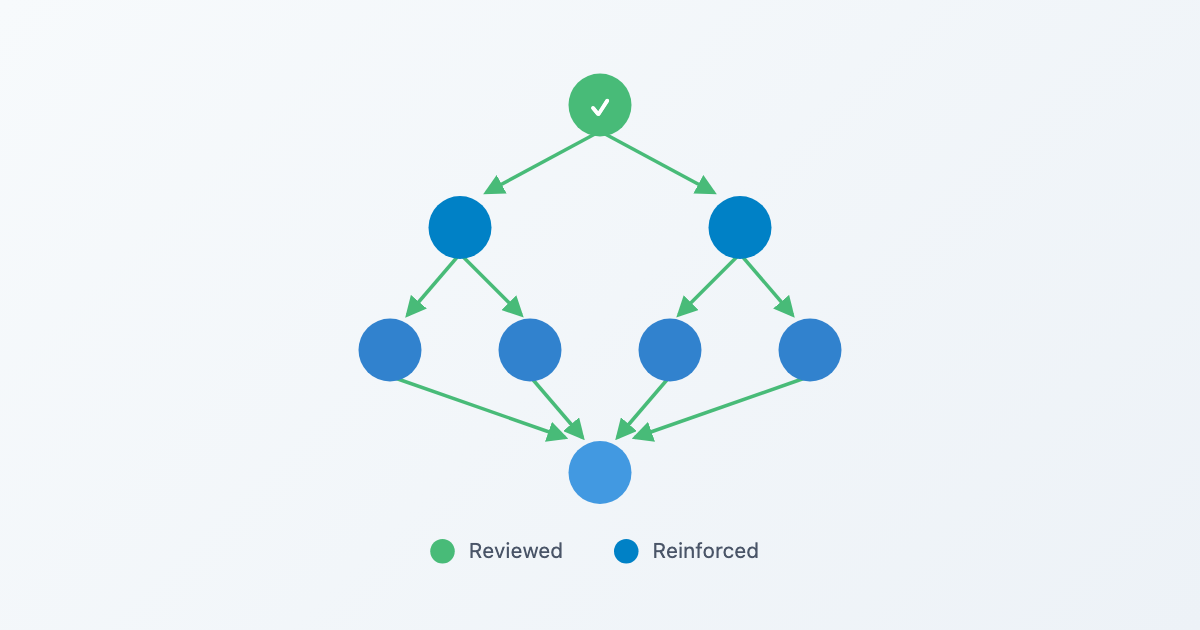
And because memory decays, the system schedules reviews: you retrieve what you've learned cold, at increasing intervals, so the connections stay live instead of fading into "I understood it once". What you build stays built - and stays yours.